

Introduction
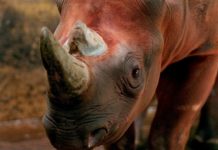
The Javan Rhino (Rhinoceros sondaicus) remains one of the world’s most critically endangered megafauna. With a population teetering around the 76-individual mark, confined exclusively to the dense jungles of Indonesia’s Ujung Kulon National Park, the margin for error is zero. In the past, conservation relied on physical patrols and guard posts. Today, the fight for the Javan Rhino’s survival is being waged with high-tech tools: artificial intelligence, thermal cameras, and genetic sequencing. As of late 2025, these technologies are providing the best—and perhaps last—chance for this species.
3The AI Eye in the Jungle: Smart Camera Traps
The vast, rugged terrain of Ujung Kulon makes manual surveying nearly impossible. The breakthrough in recent years has been the deployment of a sophisticated network of AI-enabled camera traps.
Real-time Threat Detection: These cameras don’t just take pictures; they use deep learning algorithms to distinguish between rhinos, other wildlife, and, most crucially, human intruders (poachers). Alerts are sent instantly to park rangers, cutting response time from hours to minutes.
Population Monitoring: For a species with such a small, fragile gene pool, detailed tracking is vital. The AI is trained to recognize individual rhinos based on ear notches, skin folds, and horn shape, creating the most accurate population and health data ever recorded. This precision is essential for planning future sanctuary expansion.