


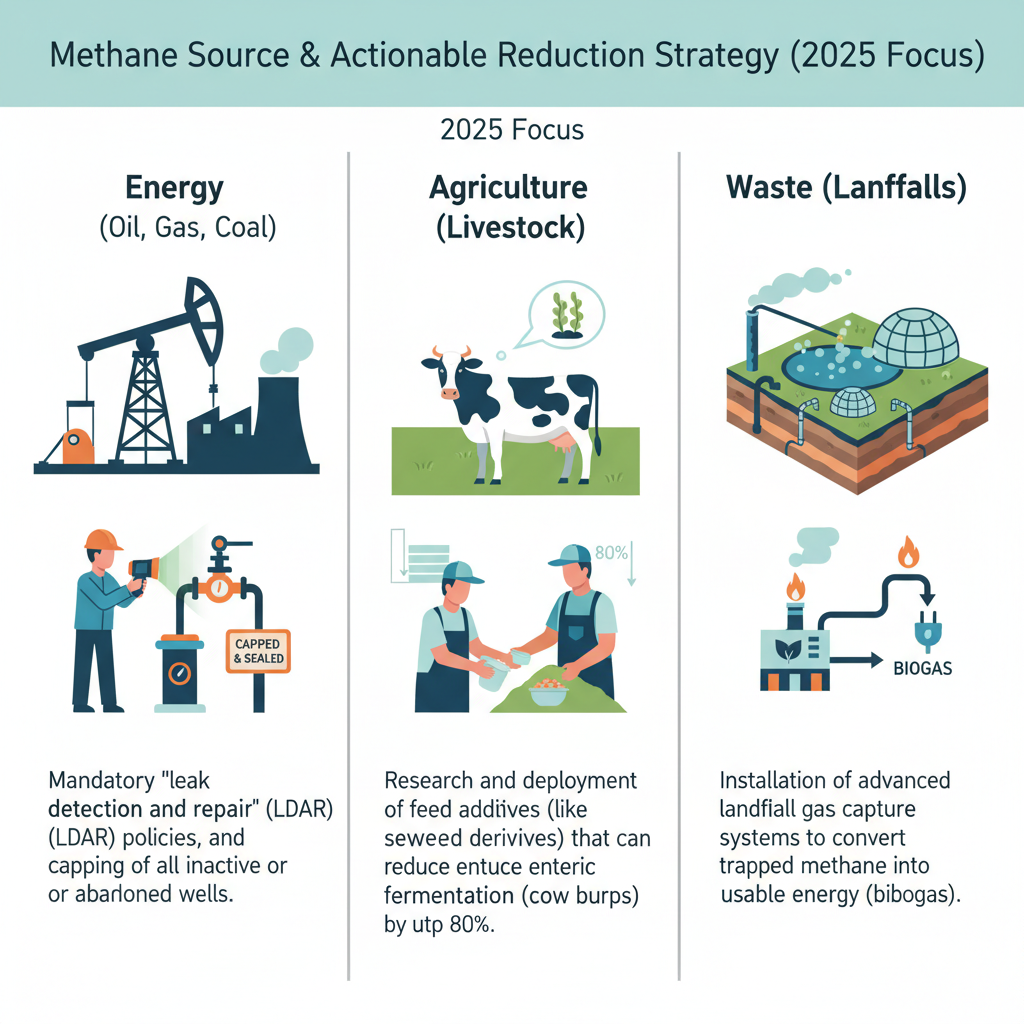
-
Introduction
For decades, the climate conversation has been dominated by carbon dioxide (). However, as the world races to limit global temperature rise to , the focus has dramatically shifted to a different, more potent gas: Methane (). While it remains in the atmosphere for a shorter period than , it is approximately 80 times more effective at trapping heat over a 20-year span. Experts now agree: rapid, aggressive methane reduction is the single most effective lever we have to slow near-term global warming in the critical next decade.

2. The Invisible Threat Revealed: Satellite Monitoring in 2024
The biggest challenge with methane has been detection, as its sources (pipeline leaks, abandoned wells, landfills) are often diffuse and invisible. That changed radically in 2024 with the widespread deployment of advanced satellite technology.
- The Methane “Super-Emitters”: Satellites are now pinpointing massive, localized plumes, often originating from oil and gas infrastructure. These “super-emitters” were previously unknown and are responsible for a disproportionate amount of emissions. This data now provides governments and corporations with the precise evidence needed for immediate action.
- Global Methane Tracker: New public databases, fed by satellite data, now offer near-real-time tracking, creating unprecedented transparency and accountability for energy companies and entire nations.
3. The Global Methane Pledge and Policy Imperatives
The international community has responded with the Global Methane Pledge, a commitment by over 150 nations to collectively cut methane emissions by at least 30% from 2020 levels by 2030.
4. A Time-Sensitive Opportunity
Methane’s high potency but short lifespan means that reductions yield an immediate climate benefit. A 30% cut in methane emissions by 2030 could shave off global warming by 2040, a crucial buffer as the world works to decarbonize energy systems. This is the ultimate “quick win” in the climate fight.