
Introduction
The sloth is universally defined by its slow movement, a trait that makes it an emblem of relaxation. Yet, the true marvel of the sloth is not its sluggishness, but the entire, self-sustaining ecosystem it carries on its back. Far from being a mere host, the sloth maintains a crucial symbiotic relationship with the fungi, bacteria, and algae that live within its fur. New research in 2024-2025 has focused intensely on this “sloth microbiome,” revealing it to be critical for the animal’s nutrition, camouflage, and even its immune system.
I. The Ultimate Symbiosis: Algae for Nutrition
The sloths’ slow, leaf-based diet is notoriously low in nutrients. This energy deficit is solved by the unique residents of its shaggy coat: green algae.
- Algae Growth: The sloth’s grooved hair structure and slow movement provide a perfect, stable environment for algae to flourish, often giving the animal a green tint that doubles as camouflage.
- Nutritional Supplement: When the sloth grooms itself or licks its fur, it consumes the algae. This consumption provides a vital supplement of lipids (fats), amino acids, and essential vitamins that are often scarce in the sloth’s primary leaf diet. It’s a living, growing food source carried right on its body.
II. The Fungal Pharmacopoeia: Future Medicine
One of the most exciting recent discoveries involves the fungal communities living inside sloth fur. Researchers have identified novel strains of fungi that produce compounds effective against parasites, bacteria, and even some cancer cells.
- Natural Antibiotics: These fungal strains appear to protect the sloth from harmful pathogens it might encounter in the rainforest canopy. Scientists are currently studying these compounds, suggesting the sloth’s fur could be a biodiversity hotspot for future human antibiotics.
- Biodiversity Risk: This discovery underscores the urgency of conservation. As the rainforest habitat shrinks, we risk losing not just the sloths, but an entire, untapped pharmaceutical library within their fur biome.
III. Behavioral Ecology and the Ecosystem
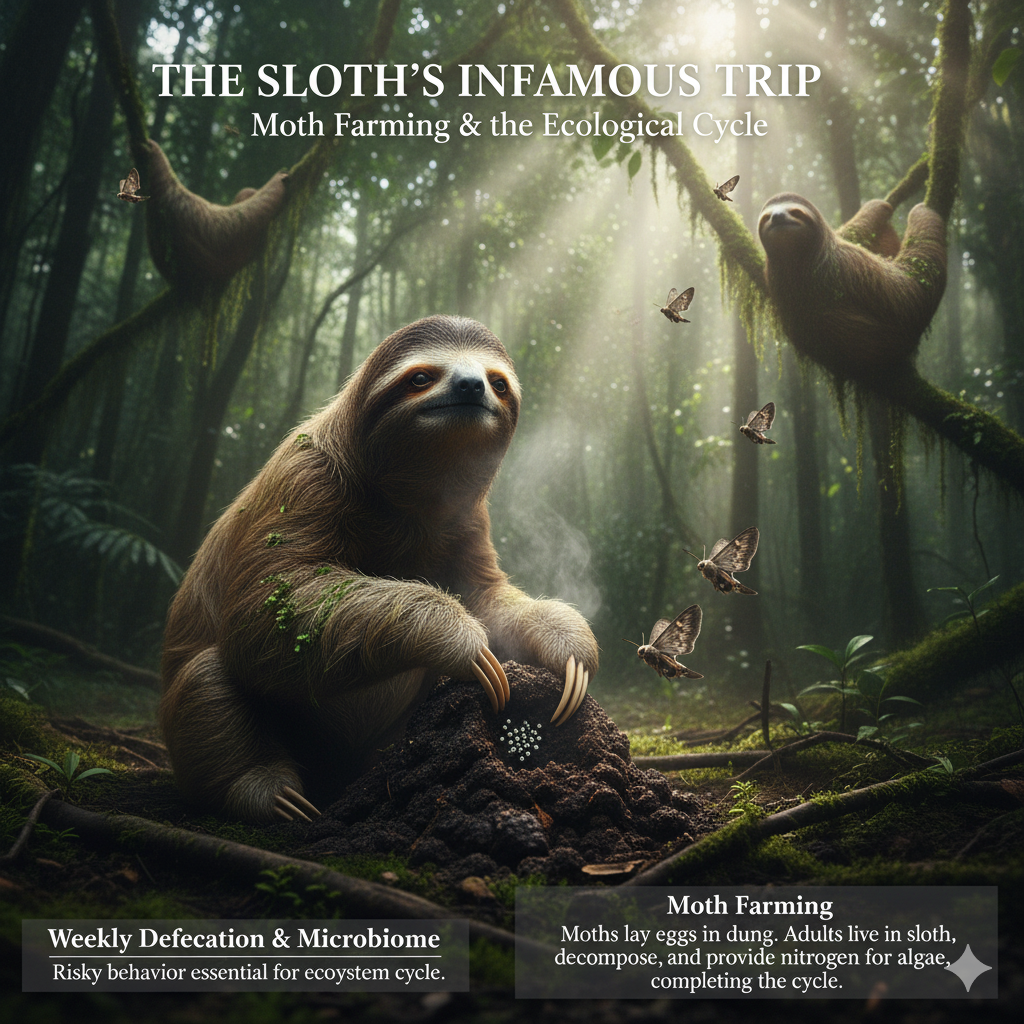
The sloth’s infamous trip to the forest floor (for weekly defecation) is also tied to its microbiome. This seemingly risky behavior is essential for the ecosystem cycle.
Moth Farming: During this trip, specialized species of sloth moths lay eggs in the dung. The adult moths then fly back up to the canopy to live in the sloth’s fur, where their decomposing bodies eventually provide more nitrogen for the algae, completing the entire ecological cycle.
Conclusion
The sloths of the Amazon are far more complex than their “slowest mammal” title suggests. They are living ecosystems, perfectly engineered to thrive in the nutrient-poor canopy. By examining the biological and chemical interactions on their bodies, recent science has turned the humble sloth into a prime subject in the quest for new medicines and a perfect illustration of co-evolution.